
Learning about the man best known for discovering electricity might be off your radar, but when I took my kids to the Thomas Edison National Historic Park in West Orange, we were blown away by what we saw and the many inventions we didn’t even realize he helped invent. The park blends education and fun, and honestly, it’s pretty interesting for adults too. We toured Edison’s actual laboratories, where he experimented and tinkered with electricity and more; marveled at his original inventions like his talking doll; saw his (slightly messy) workspace; and learned that Edison had 1,093 United States patents. It’s the kind of place where kids can take a peek into the past, get inspired, and see a piece of living history. And if you want to explore more, Edison’s Glenmont Estate is just minutes down the street. Read on for more info about the Thomas Edison National Historic Park and what you should do when you get there. (featured photo credit: NJ MOM)
Thomas Edison National Historic Park
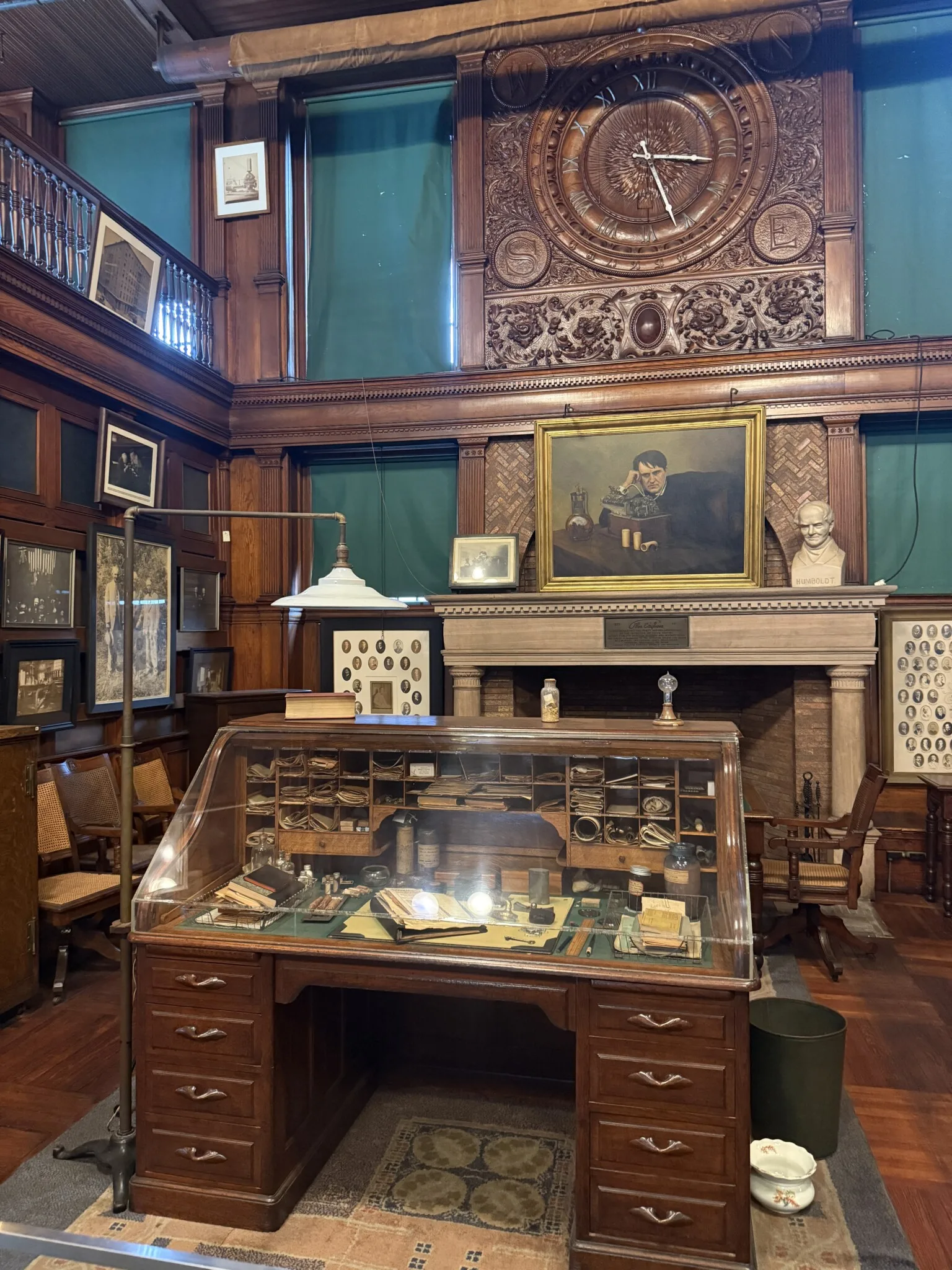
Exploring Thomas Edison National Historic Park
We started in the Visitor Center to watch the park orientation film, visit the museum store, and pick up the map and National Junior Ranger Program information. My kids had heard about Thomas Edison and how he invented the incandescent light bulb, but didn’t know much about the man behind the life-changing invention. The film gave us a good sense of Thomas Edison’s significance and his inventions (he developed the phonograph, helped build early central power stations, and even contributed to early motion pictures), and the kids were eager to learn more. We also picked up materials for the National Junior Ranger Program, which was a great addition to our trip because it kept everyone engaged throughout the museum. The Junior Ranger sheet included a scavenger hunt, a crossword puzzle, and a section that asked for a park ranger’s signature after listening to one of their talks. We couldn’t wait to get started.
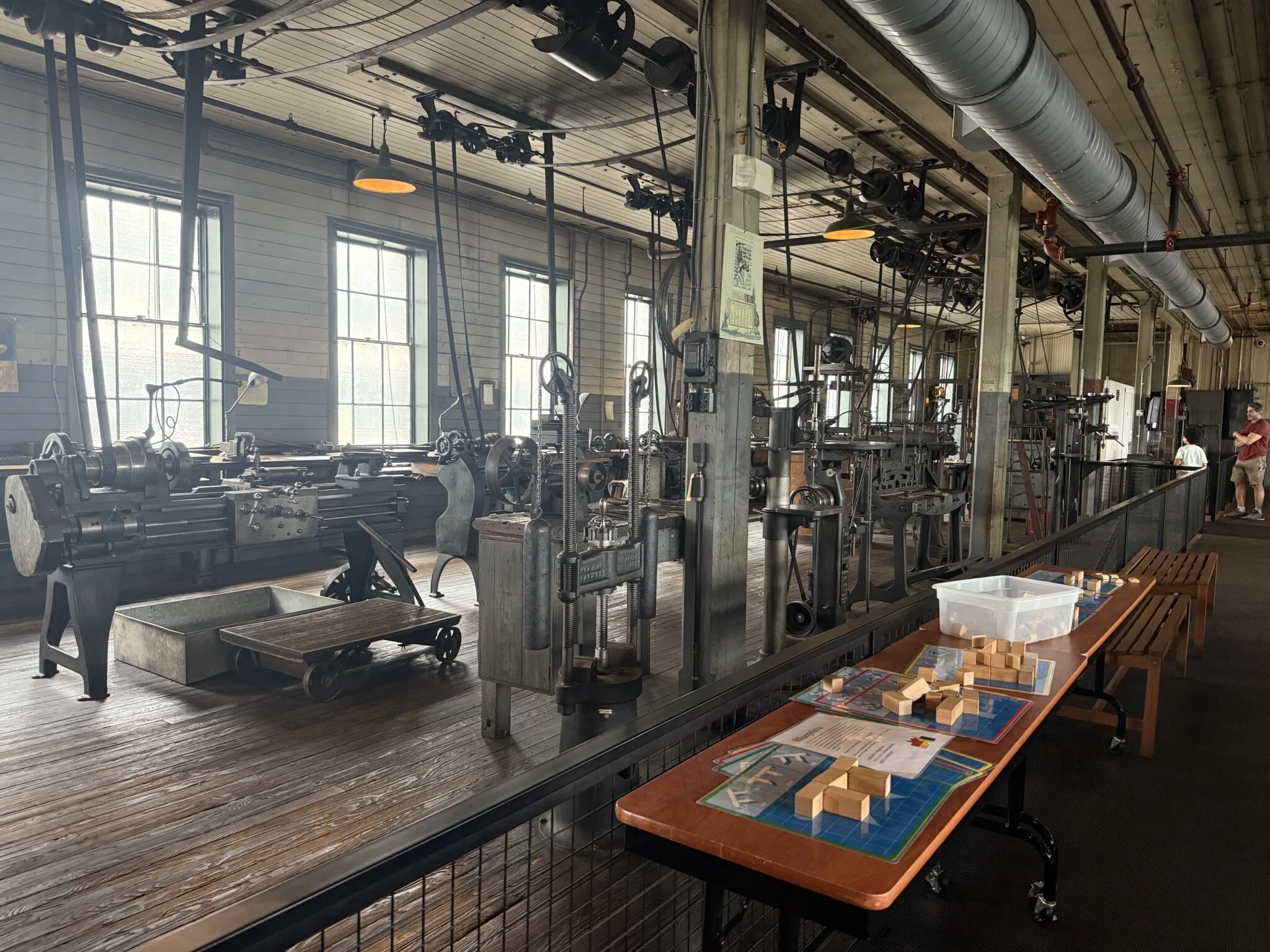
Explore the main laboratory
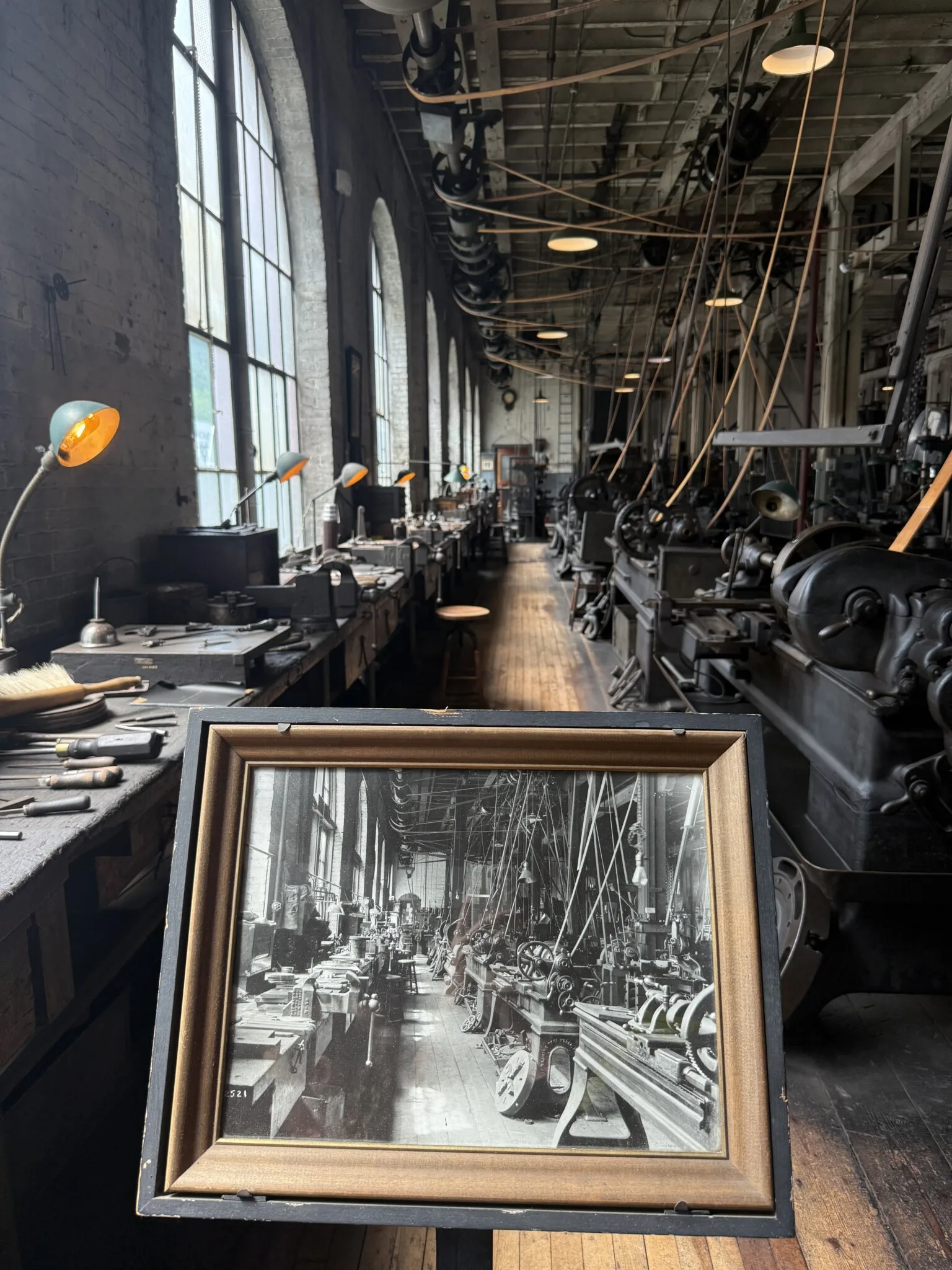
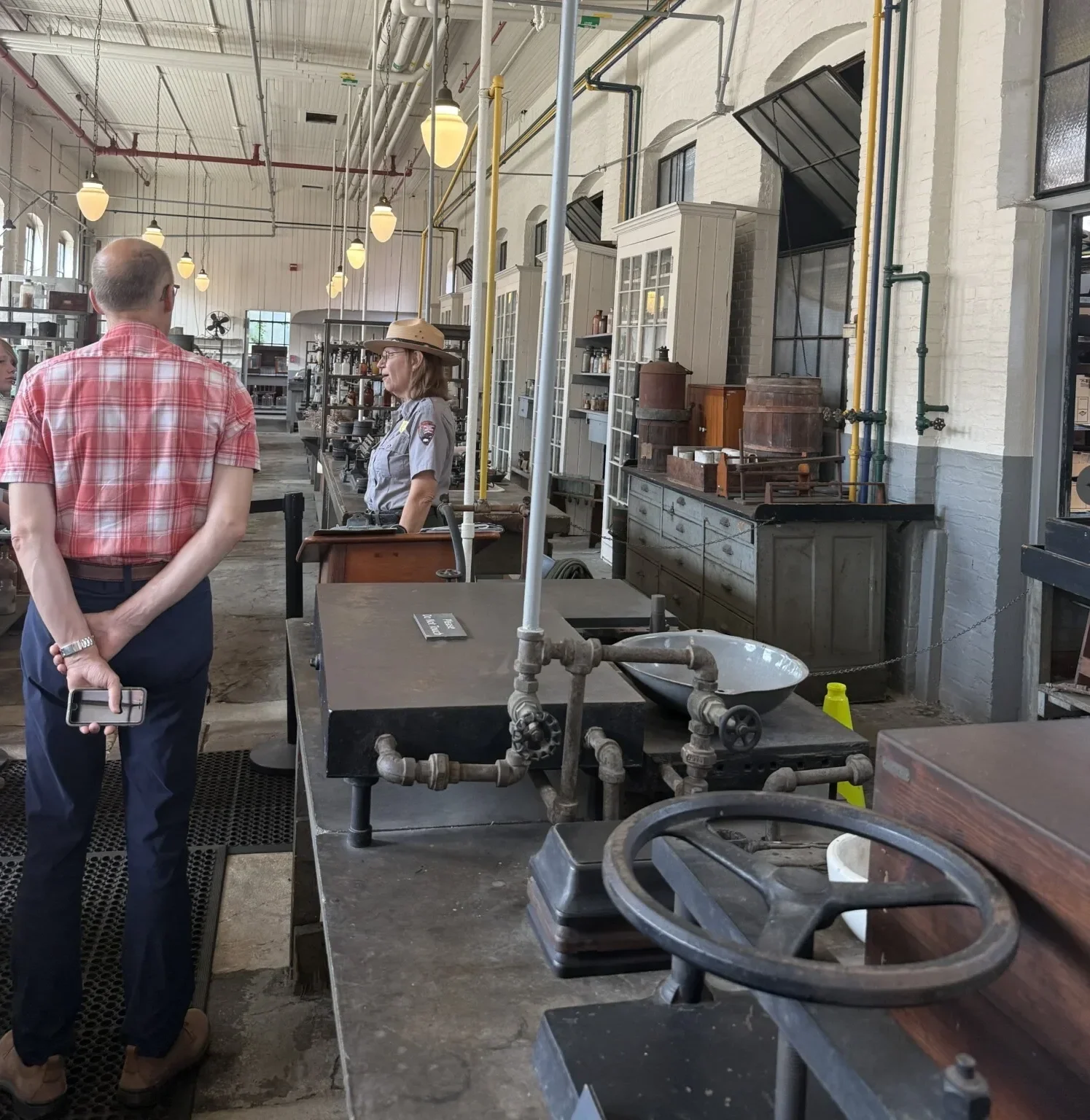
Once we had all our information, we headed to the Main Laboratory Building, which includes Thomas Edison’s library, machine shops, a music room, and other exhibits. Inside the laboratory, we were in awe of how the rooms were restored to their original splendor, giving us an authentic sense of what it felt like to be there. We even saw Edison’s special elevator, which was for Mr. Edison’s use only in the heavy machine shop area, where his workers encouraged him to use it when he reached his 80s, even though he still preferred the stairs. Thomas Edison’s lab in West Orange is 10 times the size of his Menlo Park lab, and it was one of the largest laboratories in the world in his time. It was a unique experience to walk through the facilities where Edison and his workers, called “muckers,” turned ideas and research into prototypes and patents. It was fascinating to see the belt-and-pulley systems, and interactive areas along the way let kids feel like inventors too.
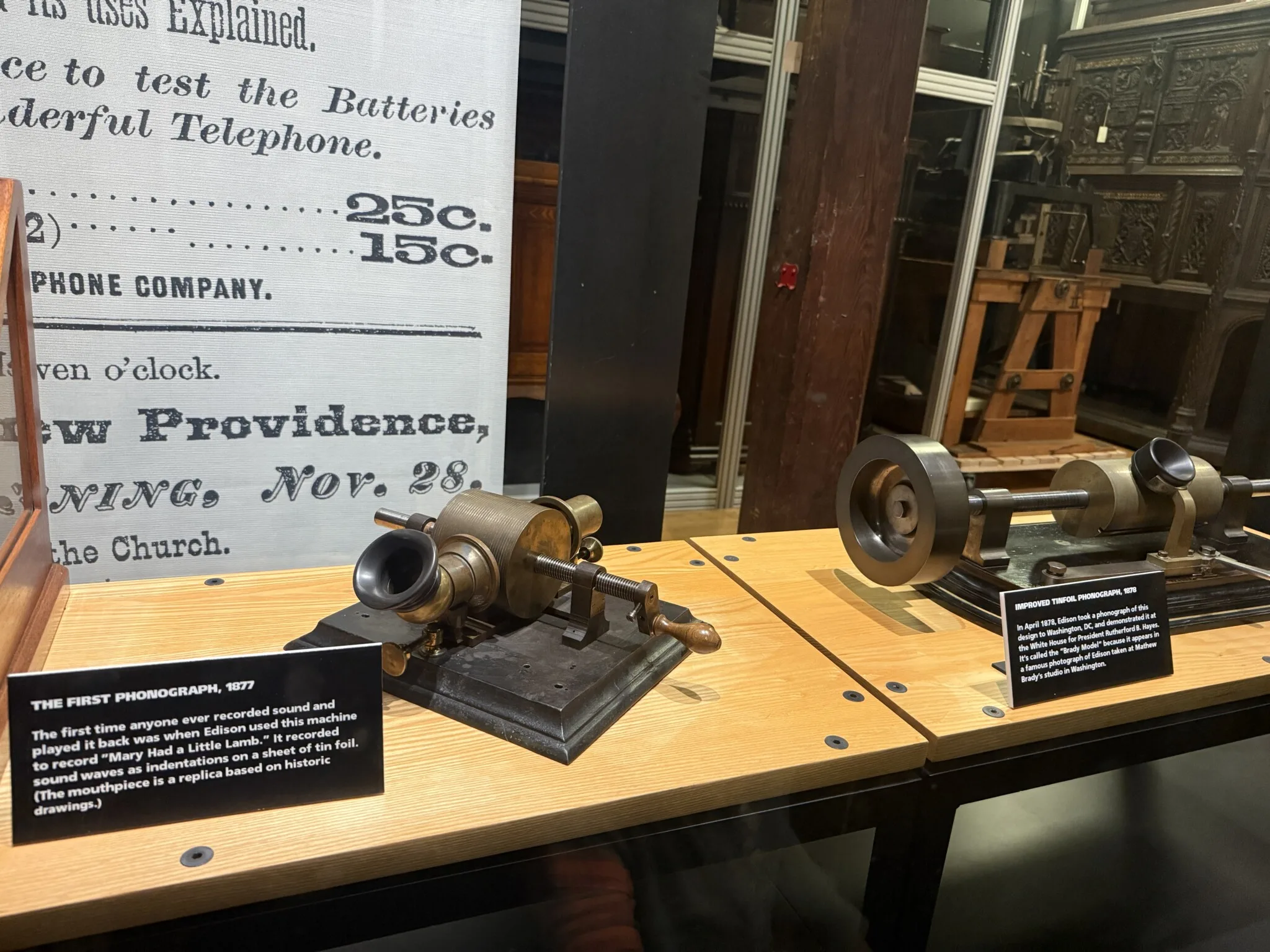
Learn about Thomas Edison’s accomplishments
Thomas Edison’s three greatest inventions include the electric light system, the phonograph (the first machine to record someone’s voice and play it back), and motion pictures. He also patented many things we never realized, including the alkaline storage battery, improvements to the telegraph that let it send up to four messages at once, the telephone, the stock ticker, X-rays, and even a talking doll. The best part for the kids was seeing how things developed so long ago and how they change over time and benefit their lives today. It felt like we traveled back in time, seeing his creations, including the first phonograph created in 1877.
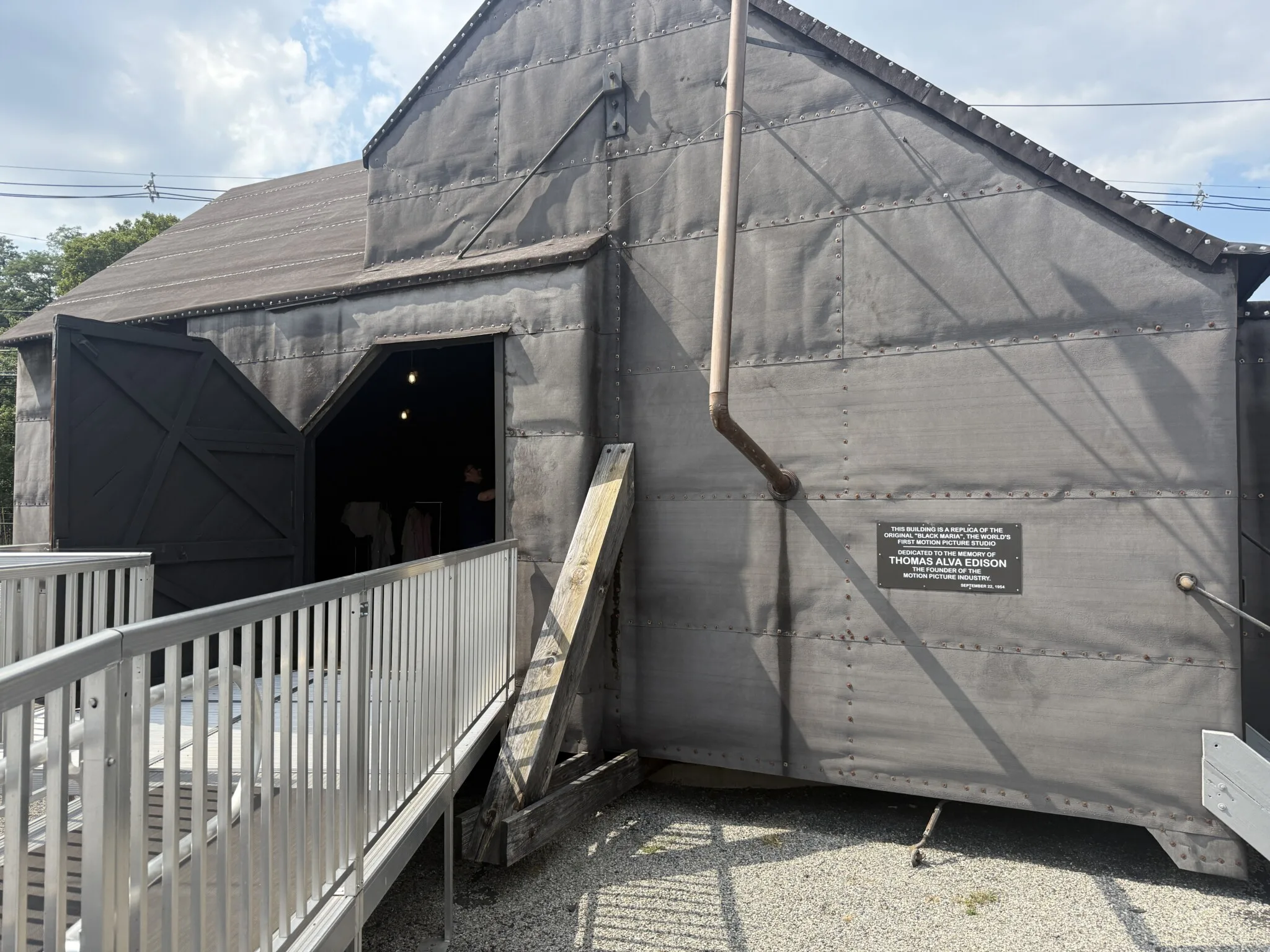
Watch film come to life
Next, we headed to the Chemistry Laboratory at the Laboratory Complex, and then we took a peek into the Pattern Shop and Blacksmith Shop. We ended at Edison’s film studio, the “Black Maria,” a full-scale replica that showed how the first films were created. We listened to a park ranger explain how some of the first films created were as simple and as short as watching someone sneeze. The kids couldn’t believe how this simple design morphed into the films they see today.
Visit the Glenmont Estate
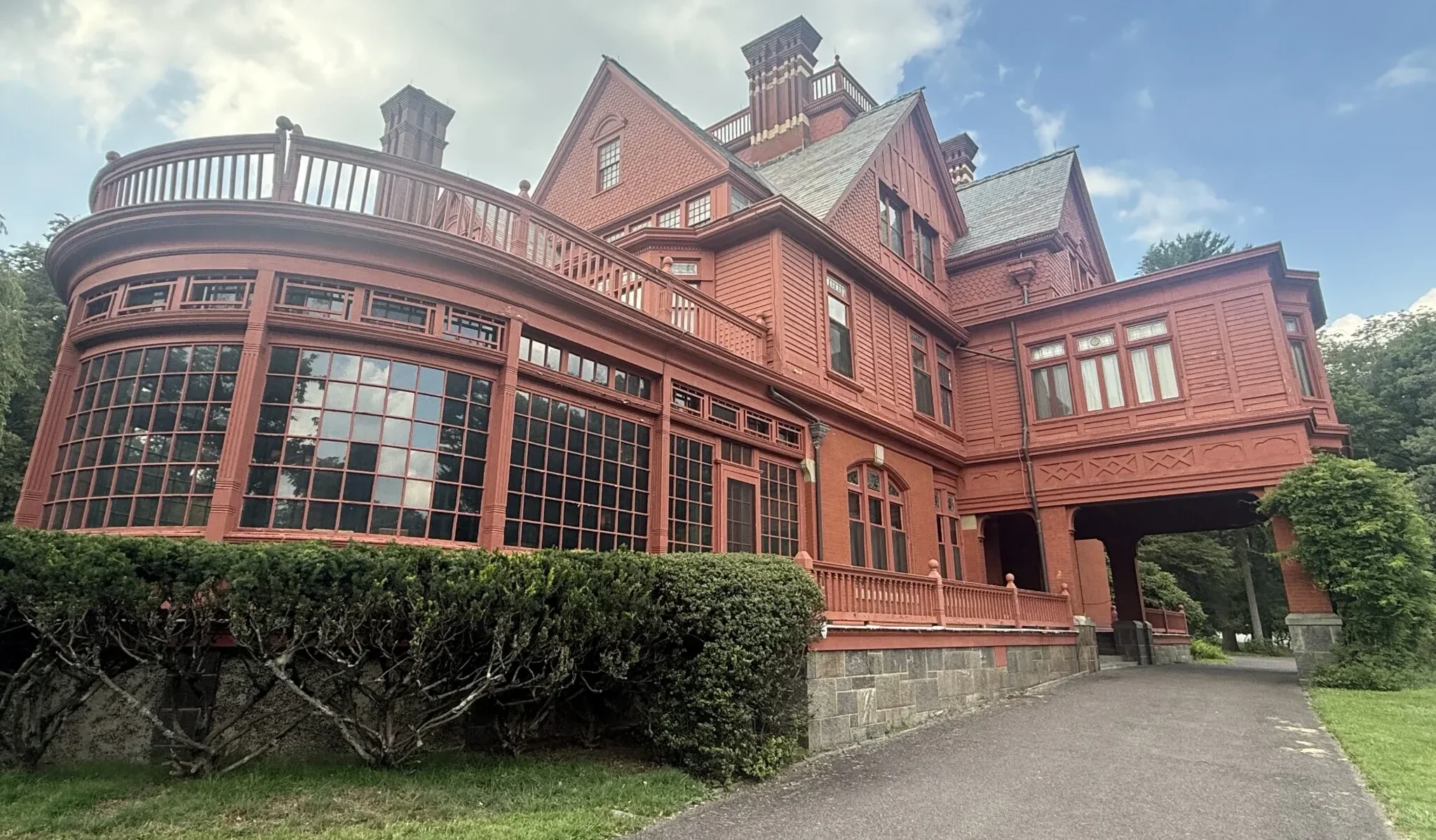
After visiting the labs, we wanted to see a more personal side of Thomas Edison, so we drove a few minutes down the road to the Glenmont Estate—a 29-room home, set on 13-1/2 acres, that Thomas Edison bought for his wife, Mina, who wanted a country home. We loved strolling around the grounds, imagining where the Edisons raised their children and hosted friends, family, and business associates. Inside, you can view portraits, artifacts, and original furnishings, and after the tour, visit Thomas and his wife Mina’s headstones in the backyard. The Glenmont Tour took us through the mansion’s first and second floors. The beautiful woodwork, stained glass windows, and the hand-painted ceiling transported us back to the Victorian era—it was incredible to see how ornate homes were back then, and it was especially fun for the kids to experience that history.

FAQS About Thomas Edison National Historic Park
When can I visit Thomas Edison National Historic Park?
The Thomas Edison National Historic Park is open Thursdays through Mondays, from 9:30 AM to 4:30 PM. The Glenmont Estate section of the park is open only on Saturdays and Sundays. The park is officially closed from January 1 to February 25 and for federal holidays.
How much is it to visit?
Parking is free, and admission is $15 for adults 16 and older; kids 15 and under are free. If you plan to visit more than once, a $45 annual pass covers the cardholder plus three adults for a year. You can also check out free National Park days and the Every Kid Outdoors pass for fourth graders. All visits start at the Laboratory Complex, and if you want to tour Glenmont, you’ll need a separate $1 guided-tour ticket, which is best reserved in advance.
Is the park stroller friendly?
At the state park, some spots are tight for strollers, but the laboratory has elevators, and the outdoor paths are paved. Glenmont is not fully accessible; tours involve climbing many stairs with no assistance or elevator, and you stand for the full thirty-minute tour.
Can my child get a Junior Ranger badge at Thomas Edison National Historic Park?
Yes, when you check into the Visitor Center, your kids can pick up the Junior Ranger paper and a pencil, then answer questions on the sheet while traveling through the park. After completing the sheet, return to the Visitor Center to turn in the paperwork, get sworn in as a Junior Ranger, and earn the Thomas Edison National Historic Park patch and badge.
If I have questions, are there park rangers available at the park?
When you arrive at the park, there is a list of tour times where you can catch a park ranger giving a talk around the park; I would definitely recommend stopping to listen. They bring the park to life and point out interesting details that are easy to miss, plus they can answer any questions you may have.
Thomas Edison National Historic Park
211 Main Street
West Orange, NJ 07052
Become an NJ MOM Insider—sign up for the NJ MOM newsletter to get the lowdown on everything for your family, filled with in-the-know tips for NJ moms. And be sure to follow @NJMOM on social for all the latest info and family fun.
(Includes material Copyright 2026 NJ MOM LLC. All rights reserved. This material may not be published, broadcast, rewritten, or redistributed.)