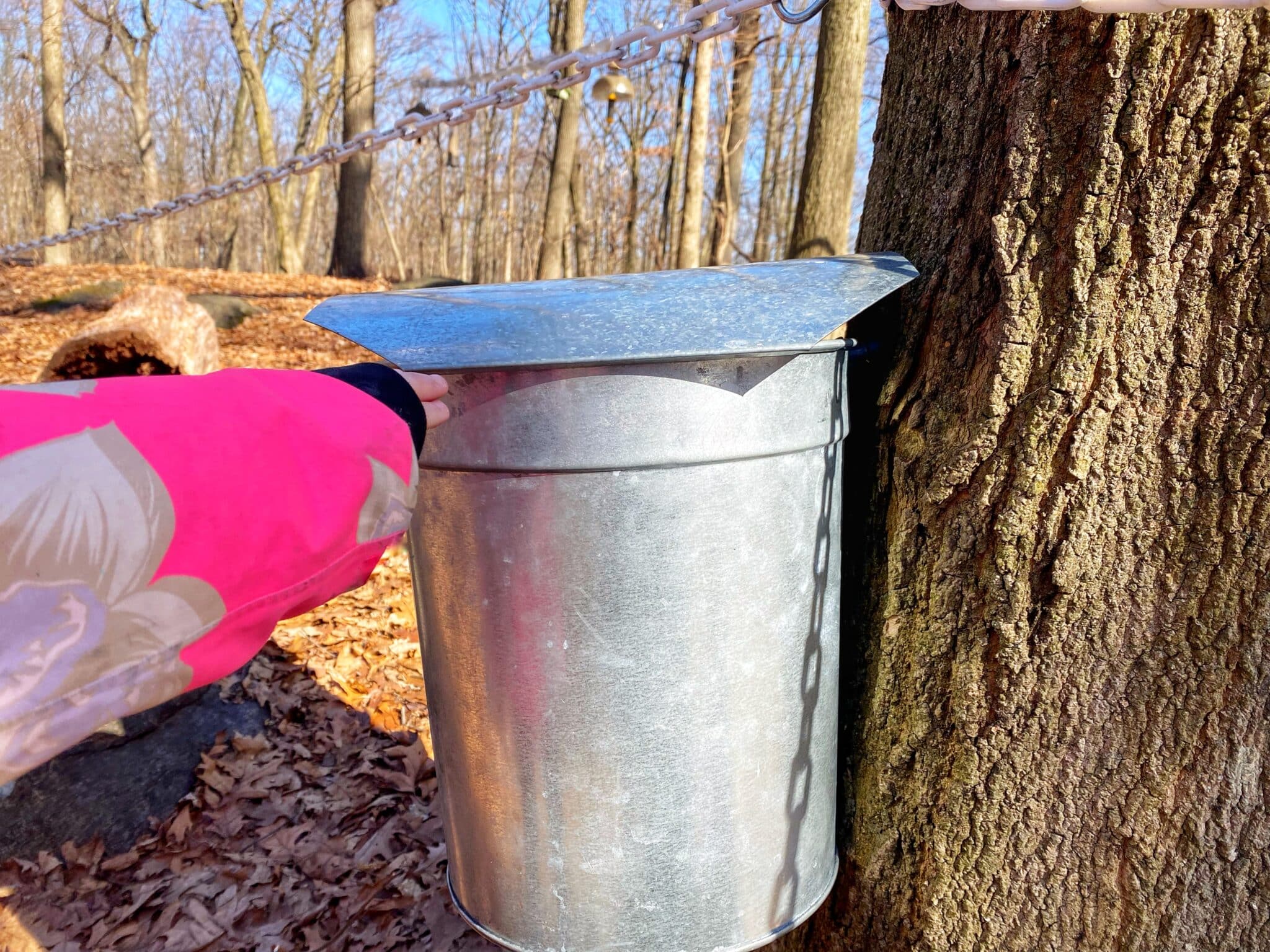

My daughter loves waffles with maple syrup, and when I told her we were going to learn how maple syrup is made at Tenafly Nature Center, she was thrilled. We enjoyed spending the afternoon identifying maple trees, learning about the ideal conditions for collecting sap, and even doing a little taste testing. Besides maple sugaring events, this non-profit, independent, member-supported nature preserve in Bergen County features a Faerie Trail, 7 miles of hiking trails, and a pond teeming with wildlife—it’s no wonder this nature center is a go-to in New Jersey. Scroll down for more details about visiting during maple sugaring season, which runs from Sunday, January 18, through March 15, 2026. And if Tenafly is far from you, there are plenty of other places to find maple sugaring demonstrations. (featured photo taken at Tenafly Nature Center)
A Visit To Tenafly Nature Center
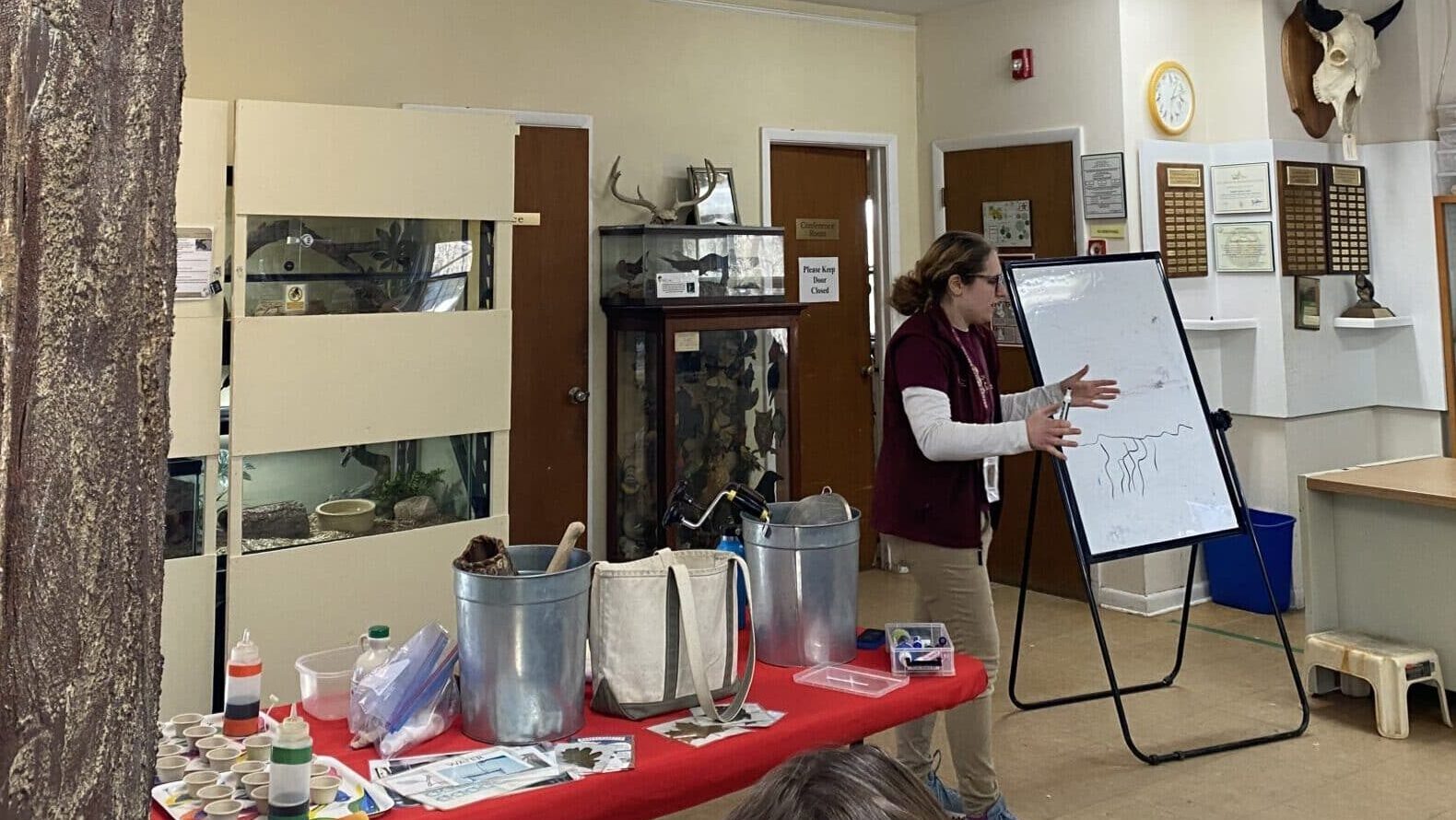
Learning about maple trees
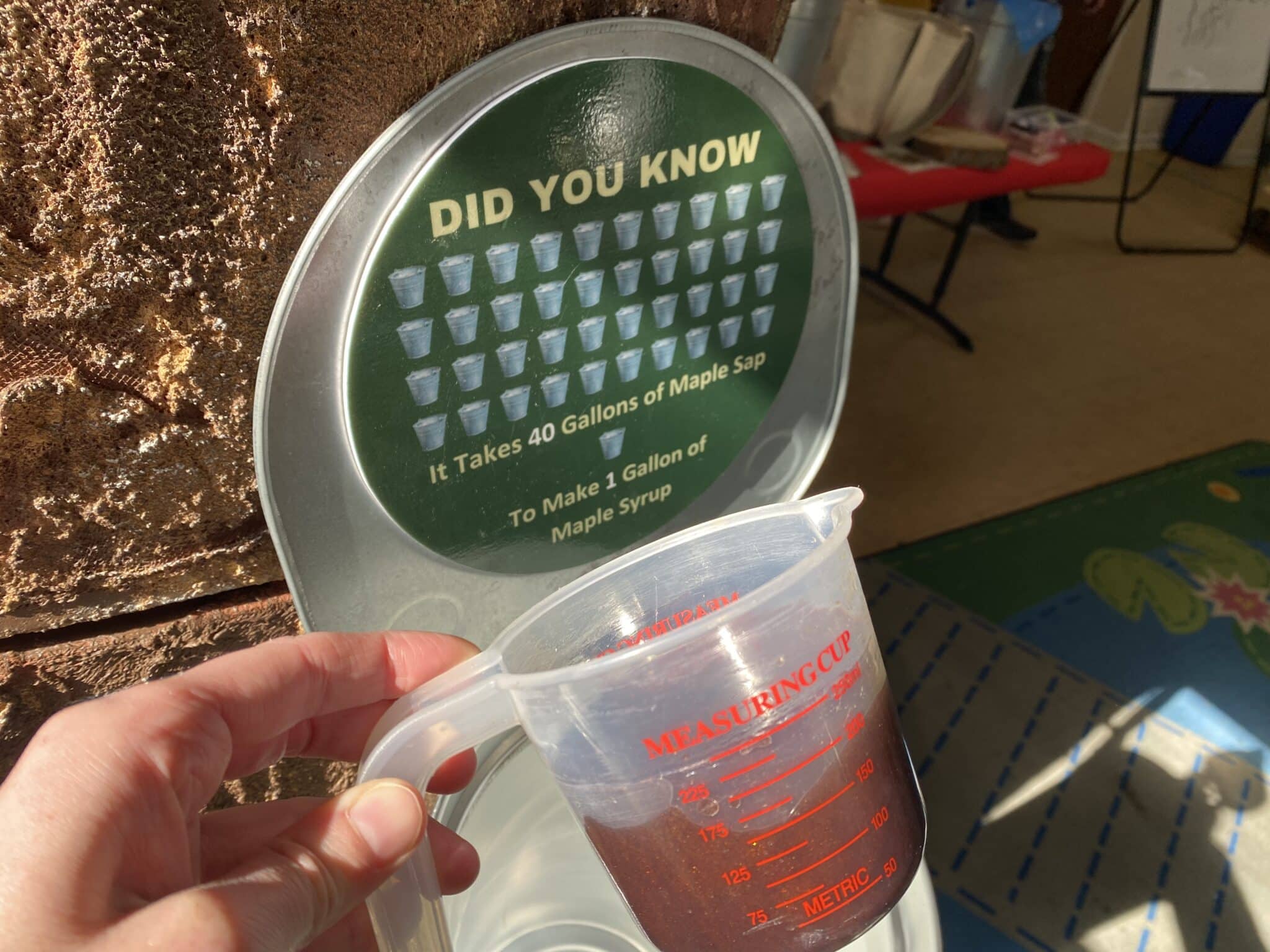
Did you know it takes 40 gallons of sap to make 1 gallon of syrup? Before we headed outdoors, we spent some time learning about the maple sugaring process in an indoor classroom at Tenafly Nature Center. We learned that sap for maple syrup is typically collected from on-site maple trees between January and March. We were also surprised to learn that collecting sap is a tricky and weather-dependent process. To get the sap from the tree, it must be below freezing at night and above freezing during the day.

Tree tapping and sap collection
Our environmental educator explained that we can identify a maple tree by the leaves when searching for which tree to tap. But what do you do if the leaves have fallen off? Maple trees have grayish-brown bark, and while most bark peels horizontally, maple trees have an opposite pattern (vertically), so we searched based on the bark. We also learned about sap collection methods and how Native Americans collected sap from maple trees using items like birch bark baskets and deer antlers to pick up hot stones for boiling the sap. It was also interesting to see how collection methods have changed (no antlers here) and how modern-day tech enables sap to be collected and sent through tubes to a sugar shack.
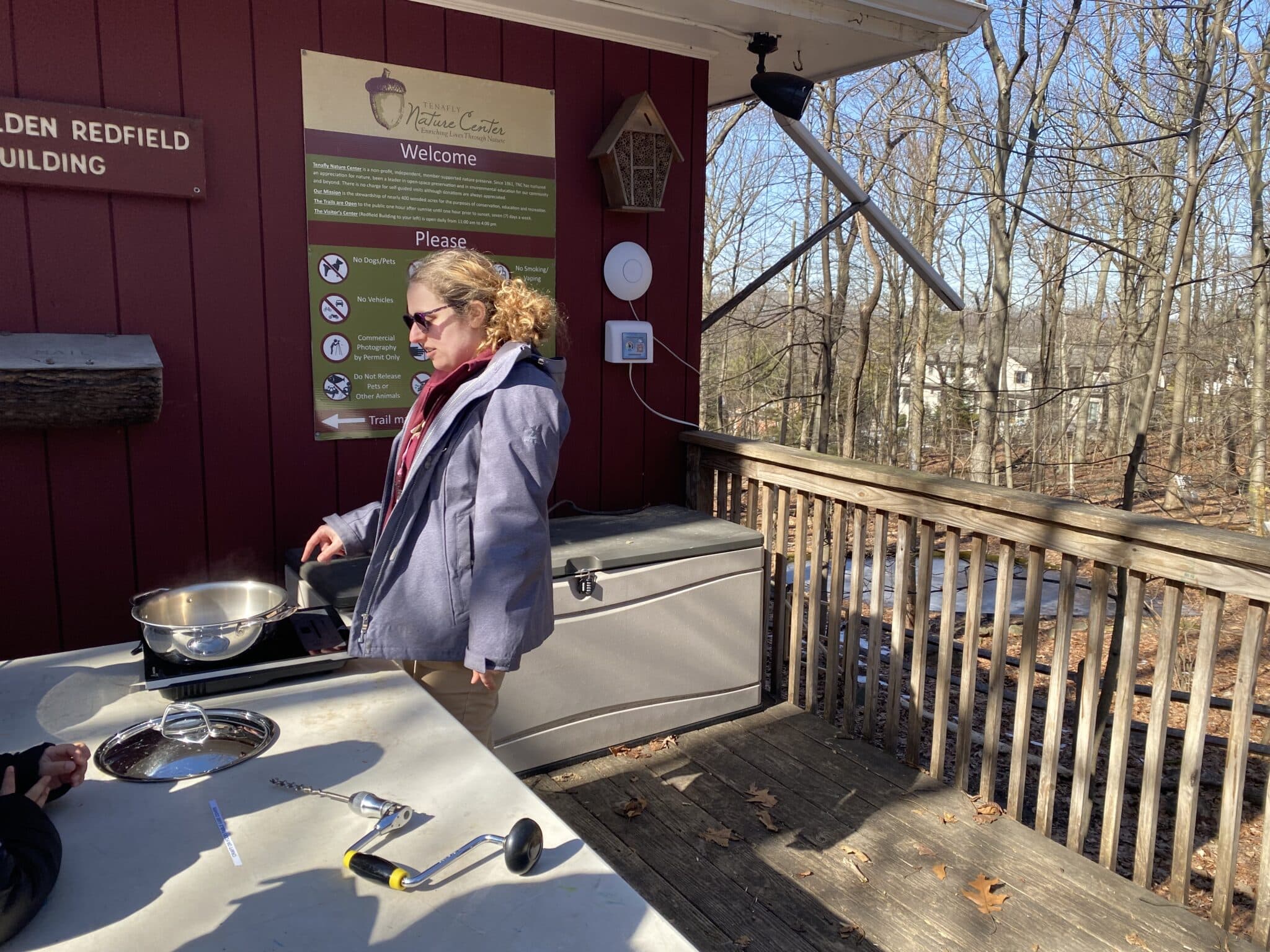
Boiling sap and taste testing
Once the sap started boiling, it produced a sweet, sugary aroma that filled the room. While the sap was boiling, we had a blind taste test to determine which syrup was real maple syrup and which was pancake syrup. We could tell right away by the rich taste of the maple syrup, and we also learned that some processed pancake syrups don’t even contain any real maple syrup.
Making maple syrup
One of the most interesting facts we learned is that the same trees can be used year after year for maple sugaring. We also discovered that syrup grades vary depending on when they are tapped. Golden sweet syrup is produced at the start of the season, and it’s the basis for maple-flavored candies. Later in the season, the sap produces amber syrup, which is less sweet, and as the season ends, the syrup gets darker.
More to explore
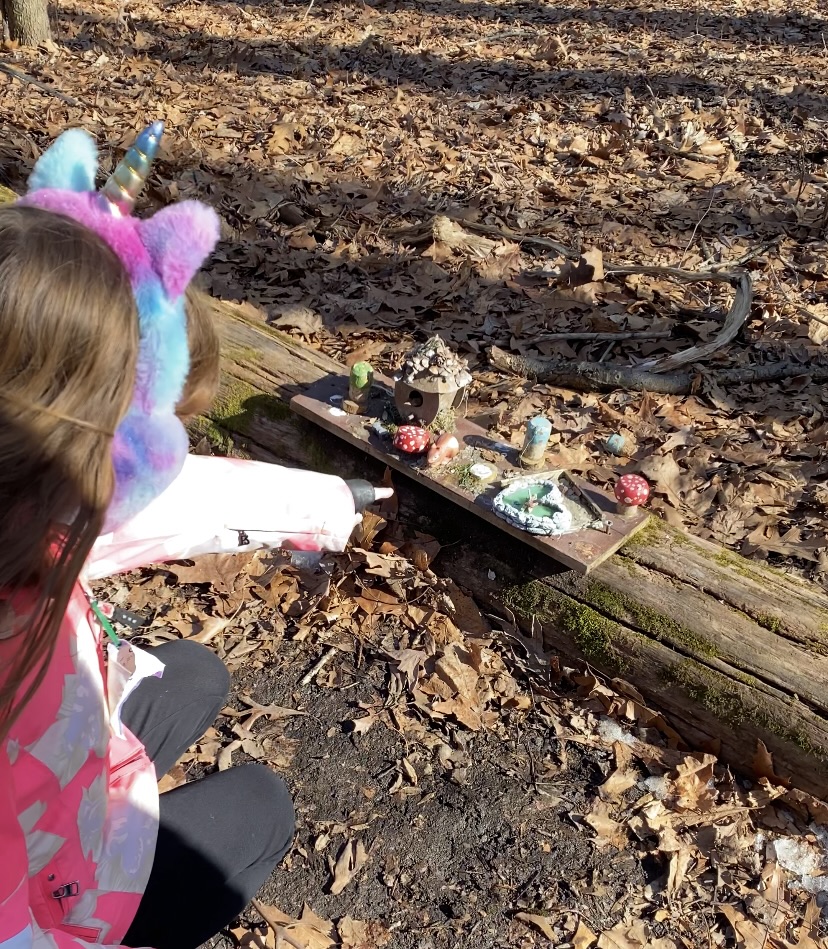
After maple sugaring, we explored the nature center and found 7 miles of hiking trails, a large pond, and a Faerie Trail. We followed the trails until we reached the Bellflower Faerie Trail, which my daughter loved. Along the trail, she discovered colorful fairy houses, a fairy trailer, and even a two-story fairy house. It was a magical .3 miles long, with the cutest little surprises and details. The house on the large tree branch was one of her favorite moments. Beyond the Faerie Trail, we took a different path and discovered Pfister’s Pond, a picturesque spot perfect for photos or for taking in nature. Within its nearly 400-acre expanse, Tenafly Nature Center offers two ecosystems, birding areas, and views for all seasons.


FAQs
When is Tenafly Nature Center open?
Tenafly Nature Center is open daily except for major holidays and private events.
What can you do at Tenafly Nature Center?
The center hosts year-round events, including Maple Sugaring in winter (January – March), Spring Break Nature Camp in spring, Family Hikes in summer, and Celebrate Fall Day in autumn. They also host birthday parties, group programs, and Forest School, where ages 1.5-7 can learn all about the outdoors. While visiting, guests can explore trails, the Pollinator Garden, the Birds of Prey Aviary, and the Little Free Library, and younger explorers can join the Junior Naturalist program.
How much is it to enter Tenafly Nature Center?
Prices vary by program, and members receive discounted rates based on their membership type.
To learn more about Tenafly Nature Center, visit their website, Facebook, and Instagram.
Tenafly Nature Center
313 Hudson Avenue
Tenafly, NJ 07670
Want the inside scoop? Sign up for the NJMOM bi-weekly newsletter to get the lowdown on everything for your family in NJ (think of it as the ultimate cheat sheet for NJ Moms). And don’t forget to tag your photos #NJMOM and @njmom for a chance to be featured.